

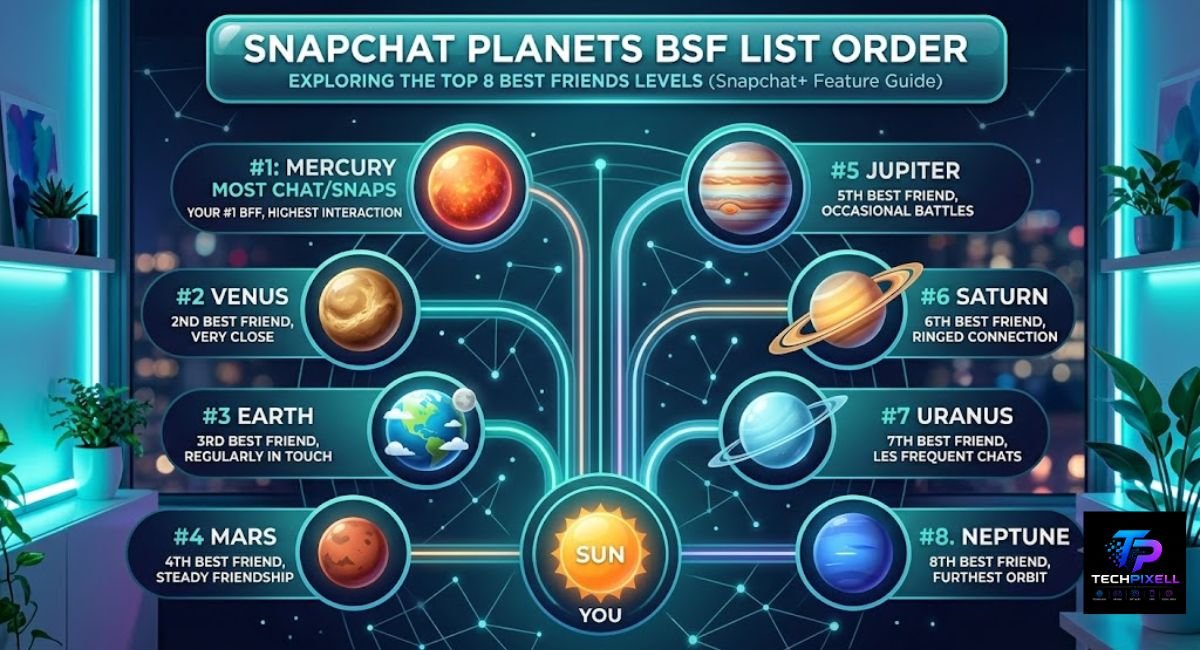
Have you ever opened Snapchat+, tapped on a friend’s profile, and noticed a colorful planet instead of a simple emoji? That’s part of the Snapchat Planets BSF List Order, a feature that turns your Best Friends list into a mini solar system. Instead of showing only who you interact with the most, Snapchat uses planets to represent the ranking of your eight closest friends.
The idea is simple but often misunderstood. Many users think the planets are random, while others believe they measure popularity or profile views. In reality, they are based on your interactions with specific friends through Snaps and chats.
In this guide, you’ll learn how the Snapchat Friend Solar System works, the complete order of all eight planets, what each planet means, how Snapchat calculates friend rankings, and why your planet can change over time. Whether you’re new to Snapchat+ or just curious about the feature, this guide explains everything in clear and simple language.
Quick Answer:
The Snapchat Planets BSF List Order is a Snapchat+ feature that ranks your eight closest friends using planets. Mercury represents your #1 Best Friend, while Neptune represents your #8 Best Friend. The ranking updates automatically based on how often you and your friend exchange Snaps and chats.
What Is the Snapchat Planets BSF List Order?
The Snapchat Planets BSF List Order is a visual version of your Best Friends list. Instead of displaying only names or emojis, Snapchat+ assigns each of your top eight friends a planet. The closer the planet is to the Sun, the stronger your friendship ranking.
This feature is designed to make friend rankings easier to understand without showing public numbers or scores. It creates a fun experience while still reflecting your real activity on the platform.
What Does the BSF List Mean?
BSF stands for Best Friends. These are the people you communicate with most often through Snaps, chats, and other interactions.
The Snapchat Planets BSF List isn’t something you can edit manually. Snapchat updates it automatically by analysing recent activity between you and your friends. If your interaction patterns change, your planet ranking may also change.
Unlike followers or friend counts, this ranking focuses on quality and consistency of interaction, not popularity.
How the Friend Solar System Works
Think of yourself as the Sun.
Your eight closest friends orbit around you as planets. The friend you interact with the most becomes Mercury because it’s the closest planet to the Sun. The eighth-ranked friend becomes Neptune, the farthest planet in the system.
The complete Snapchat Best Friend Planets Order follows the same sequence as our real solar system:
- Mercury
- Venus
- Earth
- Mars
- Jupiter
- Saturn
- Uranus
- Neptune
Anyone outside your top eight friends won’t appear in the Friend Solar System.
Do You Need Snapchat+ to Access It?
Yes. The Friend Solar System is currently available only with Snapchat+.
A standard Snapchat account still keeps track of your Best Friends behind the scenes, but it doesn’t display planet icons or rankings. Upgrading to Snapchat+ unlocks these visual features, along with several other premium tools.
Complete Snapchat Planets BSF List Order
Before looking at each planet individually, here’s the complete order from your closest Best Friend to your eighth closest friend.

| Planet | Friendship Rank | What It Means | Typical Icon |
|---|---|---|---|
| Mercury | #1 | Your closest Best Friend | Red planet with hearts |
| Venus | #2 | Very close friend | Beige planet with hearts |
| Earth | #3 | One of your closest friends | Earth with moon and hearts |
| Mars | #4 | Strong and active friendship | Red planet with purple hearts |
| Jupiter | #5 | Regular interaction | Orange planet with stars |
| Saturn | #6 | Good friend with moderate activity | Ringed planet |
| Uranus | #7 | Less frequent interaction | Green planet |
| Neptune | #8 | Last position in your Top 8 | Blue planet |
This Snapchat Planets BSF List Order never changes. Only the friend assigned to each planet changes as your interactions increase or decrease.
Let’s look at what each planet represents.
Mercury – #1 Best Friend
Mercury is the highest position in the Friend Solar System. It represents the person you exchange the most Snaps and chats with. If someone is your Mercury, they’re currently your closest Snapchat friend.
Venus – #2 Best Friend
Venus belongs to your second closest friend. The difference between Mercury and Venus is often very small. A few days of increased activity can sometimes move a friend into the top spot.
Earth – #3 Best Friend
Earth represents your third closest friendship. You’re still interacting regularly, but not quite as often as your top two friends.
Mars – #4 Best Friend
Mars is one of the most searched planets because it’s known as the Red Planet. In Snapchat, Mars means someone is your fourth closest friend. They’re still an important part of your Best Friends list, even though they aren’t in the top three.
Jupiter – #5 Best Friend
Jupiter marks the middle of the ranking. Friends in this position usually have consistent interaction with you but not enough to move into the higher ranks.
Saturn – #6 Best Friend
Saturn represents your sixth closest friend. The friendship is still active, though your conversations and Snaps may be less frequent than with higher-ranked friends.
Uranus – #7 Best Friend
Uranus belongs to the seventh position. Friends here often remain in your Top 8 because of steady interaction, even if you don’t communicate every day.
Neptune – #8 Best Friend
Neptune is the final planet in the Friend Solar System. It represents your eighth closest friend. While it’s the lowest rank in the system, it’s still part of your Best Friends list and can move higher as your activity changes.
What Does Each Snapchat Planet Mean?
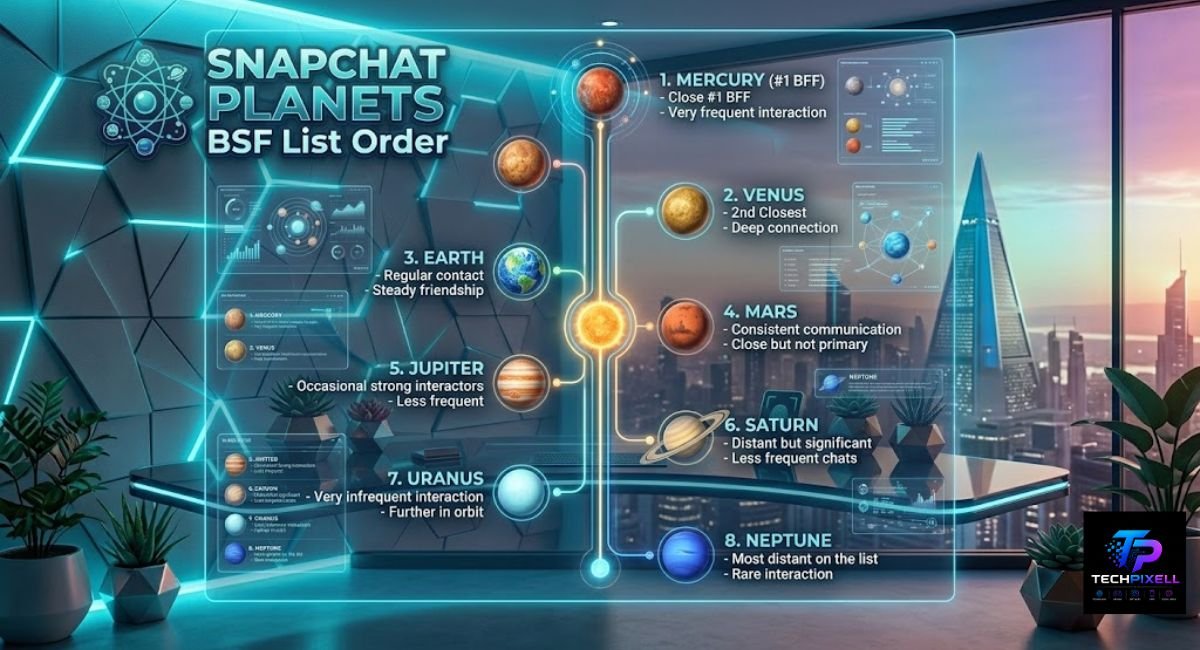
Planet badges aren’t random decorations. Every planet reflects your friendship level based on recent interactions. Understanding these meanings helps explain why your ranking changes and what each position says about your connection with a friend.
How Planet Meanings Reflect Friend Rankings
Each planet corresponds to one of the eight positions in your Best Friends list. The closer the planet is to the Sun, the more consistently you communicate with that person. Snapchat uses this visual system to make friendship rankings easy to recognise without displaying numerical scores.
Why Mercury Is First and Neptune Is Last
Snapchat follows the same order as the real solar system, making the Friend Solar System easy to understand. Mercury is the closest planet to the Sun, so it represents the friend you interact with the most. Neptune is the farthest planet, which is why it represents the eighth position in your Best Friends list.
The planet order is fixed and never changes. What changes is the friend assigned to each planet. If you start chatting more with one person and less with another, their positions may move up or down automatically.
What the Red Planet (Mars) Represents
Mars is the fourth planet in the Snapchat Friend Solar System. If someone appears as Mars, they are your #4 Best Friend based on your recent interactions.
Many users think the Red Planet has a special meaning beyond friendship ranking, but that’s not the case. Mars simply represents the fourth position in your Best Friends list. It’s still a strong friendship, just below Mercury, Venus, and Earth.
Because Mars is one of the most searched planets, many people assume it means you’re someone’s favourite friend or that they have special feelings for you. Snapchat has never stated this. The ranking is based on interaction patterns, not emotions or profile views.
How Snapchat Calculates Your Planet Ranking
Unlike a public leaderboard, Snapchat doesn’t reveal the exact formula behind its ranking system. However, the app clearly relies on your activity with individual friends rather than random assignment.
Several factors influence your planet position.
Friend Interaction
The people you communicate with most often usually receive higher rankings. Every Snap you send or receive strengthens that connection.
A friend you message every day is more likely to appear as Mercury, Venus, or Earth than someone you only contact once a week.
Snap Frequency
Photos and videos play a bigger role than many users realise. Sending frequent Snaps shows active communication, which helps maintain a higher ranking.
If you suddenly stop exchanging Snaps with a close friend, their planet may gradually move lower.
Chats and Snap Streaks
Text conversations also matter. Regular chats combined with long Snap Streaks create stronger engagement signals.
Keeping a streak active doesn’t guarantee the top position, but it usually helps maintain a stable friendship ranking.
Why Your Planet Changes
One of the most common questions is:
“Why did my Snapchat planet change?”
The answer is simple. Your activity changed.
For example:
- You started chatting more with another friend.
- Your Snap Streak ended.
- Someone else became more active with you.
- You stopped sending daily Snaps.
Because rankings update automatically, it’s completely normal for planets to change over time. These changes don’t mean you’ve been removed as friends or blocked. They simply reflect your recent activity.
Snapchat+ Planets vs Best Friends List
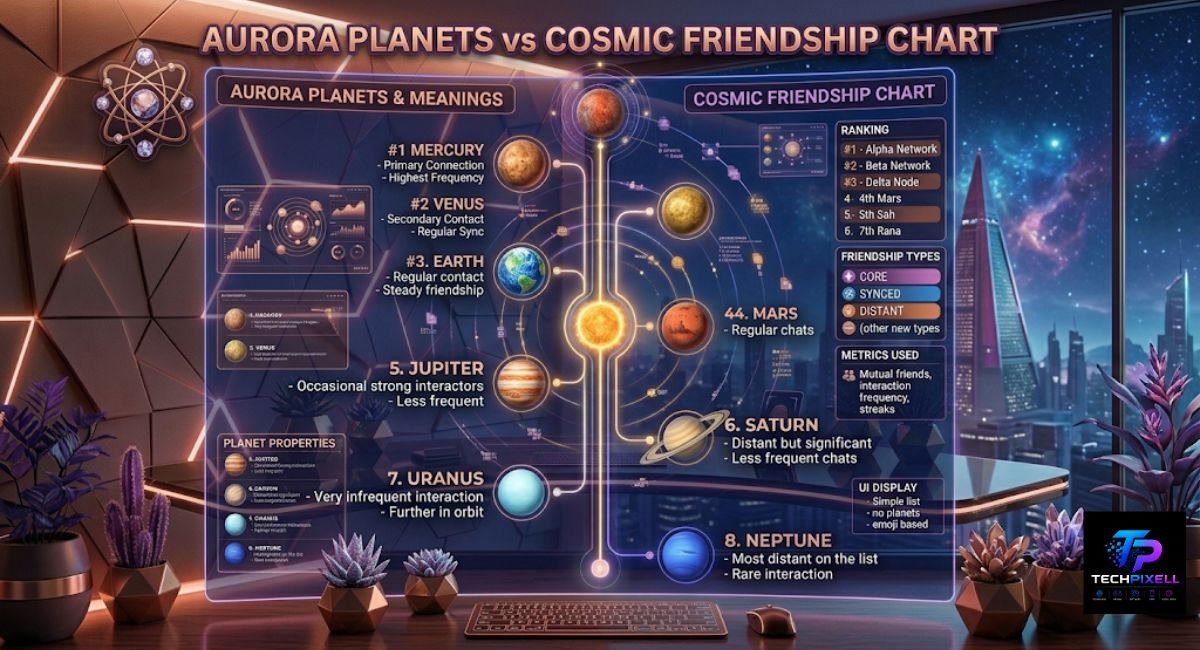
Although they seem similar, the Friend Solar System and the Best Friends list are not exactly the same feature.
What’s the Difference?
The Best Friends List exists for every Snapchat user. It keeps track of the people you interact with most.
The Friend Solar System is an exclusive Snapchat+ feature that turns those rankings into planet icons. Instead of seeing only names, subscribers get a visual representation of each friend’s position.
| Best Friends List | Friend Solar System |
|---|---|
| Available to all users | Snapchat+ exclusive |
| Shows your closest friends | Shows the same friends as planets |
| No planet icons | Planet icons for ranks 1–8 |
| Basic friend ranking | Visual friendship ranking |
How Snapchat+ Displays Planet Icons
When you visit a friend’s profile, Snapchat+ may show a Best Friends or Friends badge.
Tapping the badge opens the Friend Solar System, where you’ll see which planet represents that friendship. Every planet has its own design with colours, hearts, stars, or rings that make it easy to recognise.
Common Misconceptions
There are several myths about Snapchat Planets. Here are the facts:
- Planets do not show who viewed your profile.
- They do not reveal who likes you the most.
- They do not represent follower counts.
- They change automatically based on your activity.
- Only Snapchat+ subscribers can view the Friend Solar System.
Understanding these points helps avoid confusion when your planet changes.
Tips to Improve Your Snapchat Planet Ranking
If you’d like to move closer to Mercury, focus on genuine interaction instead of trying to “game” the system.
Here are a few practical tips:
- Send Snaps regularly instead of only chatting.
- Keep your Snap Streaks active.
- Reply to messages instead of leaving conversations unanswered.
- React to your friends’ Stories when appropriate.
- Stay active throughout the week instead of using the app only occasionally.
- Build consistent communication rather than sending many Snaps in a single day.
Remember, Snapchat updates rankings automatically. There isn’t a button or setting that lets you choose your planet.
Frequently Asked Questions
What is the Snapchat Planets BSF List?
It’s a Snapchat+ feature that ranks your eight closest friends using planets from Mercury to Neptune.
How does the Snapchat BSF Planets Order work?
Snapchat analyses your interactions, including Snaps, chats, and overall activity, to determine your friendship ranking.
What do Snapchat planets mean?
Each planet represents a different position in your Best Friends list. Mercury is your closest friend, while Neptune is your eighth closest.
Which planet is first on Snapchat?
Mercury is always first because it represents your #1 Best Friend.
What is the order of Snapchat Planets BSF List Order?
The order is:
- Mercury
- Venus
- Earth
- Mars
- Jupiter
- Saturn
- Uranus
- Neptune
Why did my Snapchat planet change?
Your interactions with friends changed. Snapchat updates the rankings automatically as your activity changes.
How do Snapchat friend planets work?
They visually represent your Best Friends ranking using the order of planets in the solar system.
Is Snapchat Planets only for Snapchat+?
Yes. The Friend Solar System is available only to Snapchat+ subscribers.
How is the Snapchat planet ranking calculated?
Snapchat considers factors such as Snaps, chats, Snap Streaks, and overall interaction frequency. The company hasn’t published the exact formula.
What does each Snapchat planet represent?
Each planet corresponds to one position in your Top 8 Best Friends, with Mercury representing the closest friend and Neptune representing the eighth.
Final Thoughts
The Snapchat Planets BSF List Order makes it easy to understand your closest friendships through a fun visual system. Instead of showing numbers or scores, Snapchat+ uses planets to represent your Best Friends based on how often you interact.
Now that you know the complete planet order, the meaning of every planet, and how the ranking system works, you’ll have a much better understanding of why your planet changes and what each position represents.
Keep in mind that these rankings aren’t permanent. They update naturally as your conversations, Snaps, and activity change over time.
If you’re interested in learning more, you can also read our guides on What Is the Red Planet on Snapchat?, Snapchat Red Planet Meaning Explained, and Snapchat Plus Features Guide.
Still have questions about Snapchat Planets or the Friend Solar System? Leave a comment below or contact us—we’ll be happy to help!
You May Also Like It:
What Is the Red Planet on Snapchat? Ultimate Meaning, Planet Order & Friend Ranking (2026)
What Is Mogothrow77 Software Informer? Complete Guide, Safety, Features & Download Explained

2 thoughts on “Snapchat Planets BSF List Order: Best Guide & Meanings (2026)”